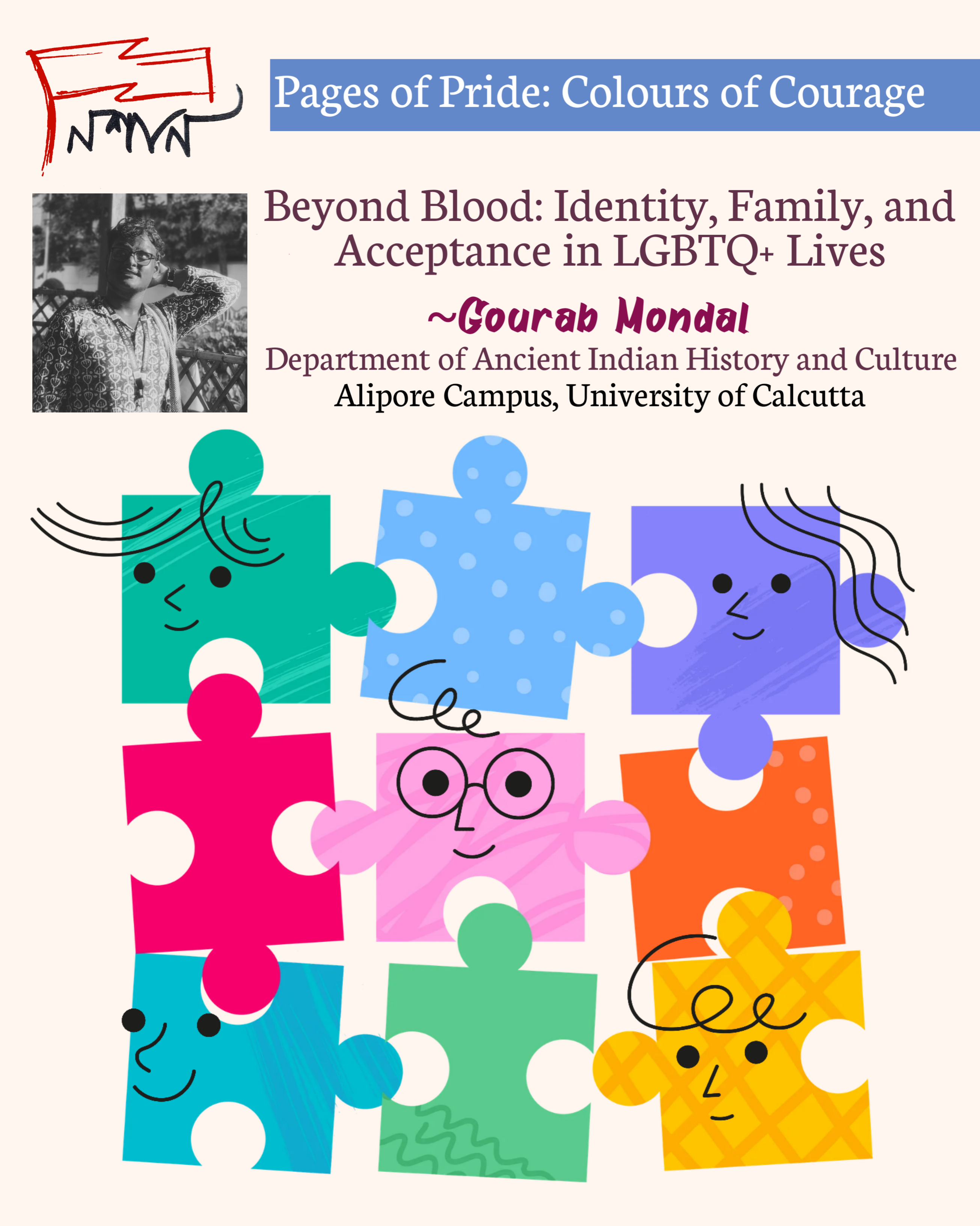
“It is not our differences that divide us. It is our inability to recognize, accept, and celebrate those differences.” – Audre Lorde
Diversity has always been an integral part of human society. Yet, when it comes to sexual orientation and gender identity, acceptance often remains a challenge. Every human being deserves to live with dignity, respect, and the freedom to be themselves. However, for many lesbian, gay, bisexual, transgender, queer, and other gender and sexual minority (LGBTQ+) individuals, these fundamental rights are often undermined by prejudice, discrimination, and social stigma. While significant legal progress has been made in many countries, including India, the journey toward true equality begins not only in courts and legislatures but also within families and communities.
‘Family’ is the first place where we learn love, trust, and belonging. It is where we seek comfort in times of fear, celebrate moments of joy, and find the courage to become who we are. A family should feel like a safe haven to every individual, a place where one is accepted without conditions or fear of judgment. It should provide emotional security, encouragement, and the freedom to express one's true self. Within a healthy family, differences are not merely tolerated; they are embraced.
For many LGBTQ+ individuals, the idea of ‘Family’ is often marked by conflict rather than comfort. The fear of rejection, ridicule, or being forced to conform to societal expectations can make home feel like an unsafe space. Many individuals hide their identities to avoid disappointing loved ones, while others experience emotional neglect or even estrangement after coming out. Yet, despite these hardships, countless LGBTQ+ people find strength in supportive friends, allies, and chosen families who offer the acceptance they were denied elsewhere. Their experiences remind us that true family is defined not by blood alone, but by love, dignity, and unwavering acceptance.
“Love takes off the masks that we fear we cannot live without and know we cannot live within.” -James Baldwin
‘Acceptance’ within the family plays a crucial role in an individual's emotional and psychological well-being. Studies consistently show that LGBTQ+ people who receive support from their families experience lower levels of depression, anxiety, and suicidal thoughts while enjoying greater self-confidence and overall life satisfaction. Acceptance does not require complete understanding from the very beginning. It begins with listening, learning, and respecting a loved one's identity without judgment.
“Family acceptance has a significant positive impact on the mental health and well-being of LGBTQ+ young people.” -The Family Acceptance Project
‘Identity’ is a deeply personal aspect of every individual. It encompasses how people understand themselves, including their sexual orientation and gender identity. Just as no two individuals are exactly alike, the journey of self-discovery differs from person to person. Some recognize their identity at an early age, while others take years to understand and accept themselves. This process should never be rushed or dictated by societal expectations. Instead, individuals should be given the freedom and support to explore and embrace who they truly are.
In India, conversations surrounding LGBTQ+ rights have become increasingly visible over the past decade. A landmark moment came in 2018 when the Supreme Court, in the Navtej Singh Johar v. Union of India judgment, decriminalized consensual same-sex relationships by striking down portions of Section 377 of the Indian Penal Code.
“Constitutional morality cannot be martyred at the altar of social morality.” Chief Justice Dipak Misra, Navtej Singh Johar v. Union of India (2018)
This historic decision affirmed that equality, dignity, and privacy are fundamental rights guaranteed by the Constitution. However, legal recognition alone cannot erase centuries of prejudice. Many LGBTQ+ people continue to face discrimination in education, employment, housing, healthcare, and family life.
At the heart of the LGBTQ+ movement lies a simple message: everyone deserves respect, regardless of whom they love or how they identify. Compassion, empathy, and open dialogue can bridge misunderstandings and challenge long-held prejudices. Families, educators, policymakers, and citizens all have a role to play in creating a society where no one has to choose between authenticity and acceptance.
Acceptance benefits society as a whole. Diversity encourages creativity, innovation, and mutual understanding. When individuals are free to express themselves without fear, they are better able to contribute their talents to their families, workplaces, and communities. Inclusion strengthens social harmony by reminding us that our shared humanity is more important than our differences.
True progress is measured not only by changes in law but also by changes in attitude. A truly inclusive society is one where every individual can live openly, pursue their dreams, and find acceptance without fear of discrimination. By embracing diversity and treating one another with kindness and respect, we move closer to a future where every individual is accepted not only by society but also by the people they call family, making equality not merely an ideal but a lived reality for all.
“We are all different, which is great because we are all unique. Without diversity, life would be very boring.”— Catherine Pulsifer